Embedded AI and Robotics
Faculty
- Courant Institute School of Mathematics, Computing, and Data Science: Rob Fergus, David Fouhey, Yann LeCun, Lerrel Pinto, Jean Ponce, Benjamin Riviere;
- Tandon School of Engineering: Yi-Jen Chiang, Anna Choromanska, Chen Feng, David Fouhey, Zhong-Ping Jiang, Vikram Kapila, Farshad Khorrami, Joo H. Kim, Nana Obayashi, Maurizio Porfiri, Ludovic Righetti, Benjamin Riviere, Quanyan Zhu;
-
Applied Dynamics and Optimization Lab
Our lab’s fundamental disciplinary areas include multibody system dynamics, optimization theory and algorithms, and design and control of mechanical systems. Main domains for implementations and applications include robotic and biomechanical systems and their intersections such as lower-body wearable robots.
-
Automation and Intelligence for Civil Engineering Laboratory
The lab of Automation and Intelligence for Civil Engineering (AI4CE, pronounced as “A-I-force”) is a multidisciplinary research group at New York University that focuses on advancing fundamental automation and intelligence technologies, and addressing challenges of their applications in civil and mechanical engineering.
-
Computational Intelligence, Learning, Vision, and Robotics (CILVR)
The CILVR Lab (Computational Intelligence, Learning, Vision, and Robotics) regroups faculty members, research scientists, postdocs, and students working on AI, machine learning, and a wide variety of applications, notably computer perception, natural language understanding, robotics, and healthcare.
-
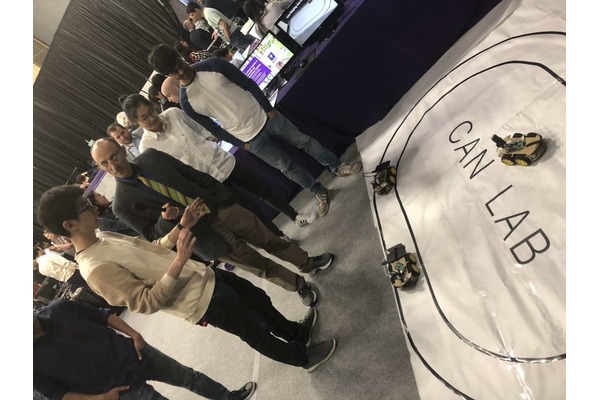
Control and Network Lab
Research activities in the Control and Network (CAN) Lab mainly focuses on the development of fundamental principles and tools for the stability analysis and control of nonlinear dynamical networks, with applications to information, mechanical and biological systems.
-
Control/Robotics Research Laboratory
The Control/Robotics Research Laboratory is located at NYU Tandon School of Engineering (Polytechnic Institute), NYU, Brooklyn, New York. The laboratory was set up in 1989 by Prof. Farshad Khorrami. The CRRL has been supported by the University and through grants and equipment donation from NSF, ARO, IBM, AT&T Foundation, and many other industrial organizations.
-
CREO
The NYU Center for Robotics and Embodied Intelligence advances research, education, and innovation at the intersection of AI and robotics to enhance everyone’s quality of life through socially beneficial technologies.
-
Dynamical Systems Lab
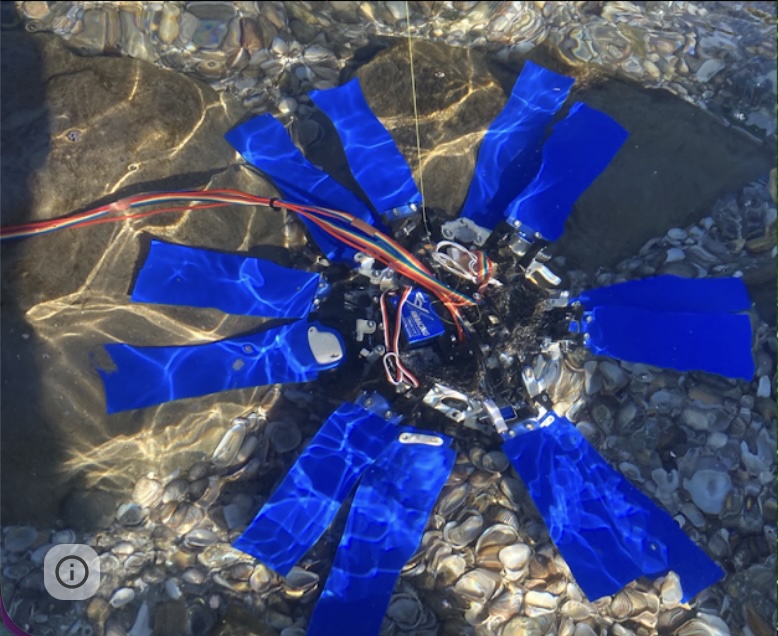
This lab uncovers the fundamental math principles governing autonomous behavior, fluid dynamics, and complex robotics networks. By studying multi-agent swarms and biological structures, scientists engineer resilient mechanical controllers for aquatic and land drones. Their research significantly advances how embodied AI systems adapt dynamically when placed into hostile or completely unpredictable terrain.
-
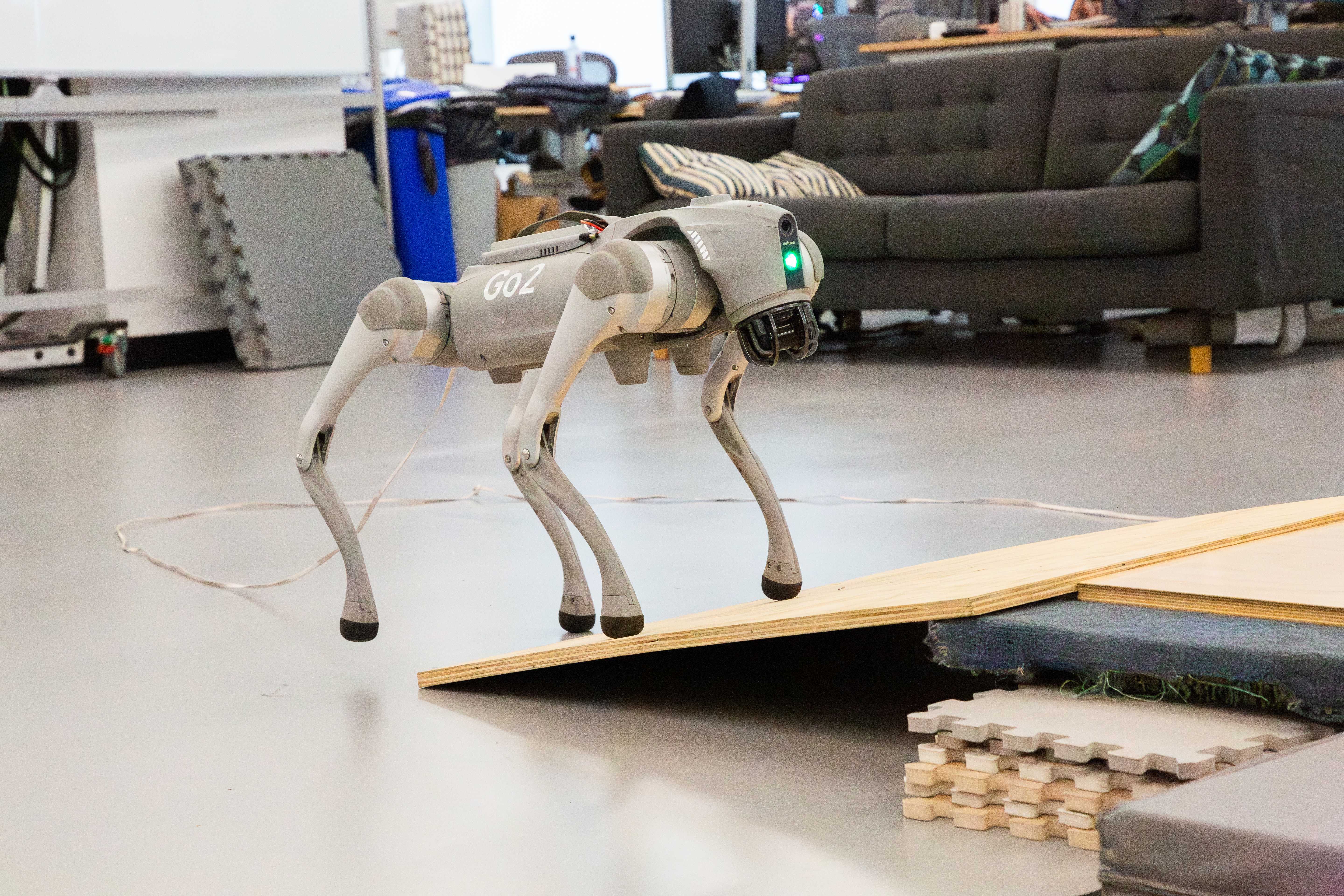
Machines in Motion Lab
The laboratory aims to understand the fundamental principles of robotic movements and to develop general algorithms that allow robots to autonomously act in unknown environments in a robust, safe and adaptable manner. The lab is specially interested in robots that can walk, climb and manipulate objects. It conducts research at the intersection of automatic control, machine learning, optimization and their application to physical systems.
-
Prema Lab
At the Prema Lab, we develop design methodologies and robotic platforms for physically intelligent systems. Our work bridges bio-inspired design, experimental methods, and data-driven optimization to create robots that are robust and efficient in the real world.
-
Robotics at Tandon
Robotics research and education at NYU focuses on developing and teaching the fundamental principles, theories, and algorithms for autonomous intelligent machines. Through our research and education, we aim to enhance mobility, service, infrastructure, and healthcare. Our mission is to carry out fundamental and multidisciplinary research to advance the science of robotics, to educate and mentor students in the theory and practice of robotics, and to make a positive impact on society.