Cognitive Science and Neuroscience
Faculty
- Courant Institute School of Mathematics, Computing, and Data Science: Grace Lindsay, Tal Linzen, Cristina Savin;
- Faculty of Arts and Science: Ned Block, David Chalmers, Moira Dillon, Todd Gureckis, Catherine Hartley, David Heeger, Grace Lindsay, Tal Linzen, Weiji Ma, Laurence Maloney, Robert Rehder, Cristina Savin, Eero Simoncelli;
-
Center for Mind, Brain, and Consciousness
The NYU Center for Mind, Brain, and Consciousness is devoted to foundational issues in the mind-brain sciences. It takes an interdisciplinary approach, including philosophy, psychology, neuroscience, linguistics, computer science, and other areas. The directors of the Center are Ned Block and David Chalmers, both of whom are Professors of Philosophy and Neural Science at NYU. The center hosts postdoctoral fellows and runs regular research workshops. It also hosts a regular series of debates between leading researchers on foundational topics in the mind-brain sciences.
-
Center for Neural Science
The Center for Neural Science is the focus for teaching and research in the brain sciences at the Washington Square Campus of New York University. Formed in 1987, the Center has been a department of the Faculty of Arts and Science since 1994.
The research interests of the faculty span a broad range of topics in neural science, including mechanisms of perception, cognition, and action. Techniques in use in our laboratories include molecular and cell biology, neurophysiology and neuroanatomy, brain imaging, and human and animal behavior. Empirical work at every level of investigation benefits from fruitful interaction with a unique and distinguished group of theorists both within the Center and in the Courant Institute of Mathematical Sciences.
-
Computational Intelligence, Learning, Vision, and Robotics (CILVR)
The CILVR Lab (Computational Intelligence, Learning, Vision, and Robotics) regroups faculty members, research scientists, postdocs, and students working on AI, machine learning, and a wide variety of applications, notably computer perception, natural language understanding, robotics, and healthcare.
-
Computation and Psycholinguistics Lab
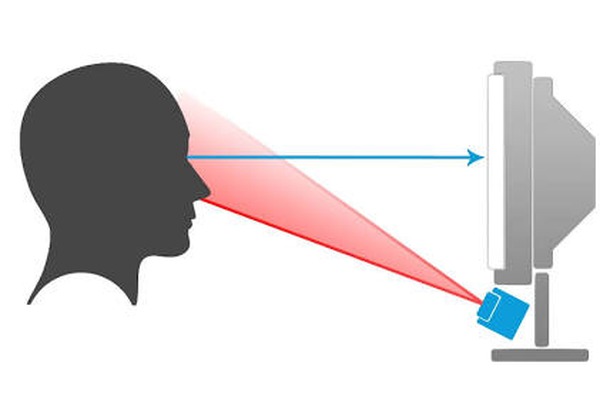
This facility investigates how human minds process language by building sophisticated neural network models. By implementing modern natural language processing pipelines alongside eye-tracking hardware, researchers dissect the precise mechanics of human comprehension. Their ultimate academic mission is using behavioral data to build foundation models that behave less like rigid code and more like biological neural architecture
-
Lab for the Developing Mind
Focused heavily on developmental cognitive neuroscience, this facility tracks how young children build their spatial and mathematical intuition. Researchers utilize non-invasive testing methodologies to map early developmental leaps in pattern recognition and baseline logic. These cognitive discoveries provide highly valuable blueprints for structuring more intuitive, human-like learning loops inside AI architectures.
-
Lindsay Lab
The Lindsay Lab at New York University has two separate goals: 1.) advance the study of the brain by using artificial neural networks as models of biological information processing and 2.) advance the fight against climate change by applying machine learning and computer vision to real-world problems.