Natural Language Processing
Faculty
- Courant Institute School of Mathematics, Computing, and Data Science: Samuel Bowman, Kyunghyun Cho, Eunsol Choi, Greg Durrett, He He, Tal Linzen, Michael Picheny, Pratyusha Sharma (2026);
- Faculty of Arts and Science: Samuel Bowman, Tal Linzen;
- Stern School of Business: Joao Sedoc;
-
Computational Intelligence, Learning, Vision, and Robotics (CILVR)
The CILVR Lab (Computational Intelligence, Learning, Vision, and Robotics) regroups faculty members, research scientists, postdocs, and students working on AI, machine learning, and a wide variety of applications, notably computer perception, natural language understanding, robotics, and healthcare.
-
Computation and Psycholinguistics Lab
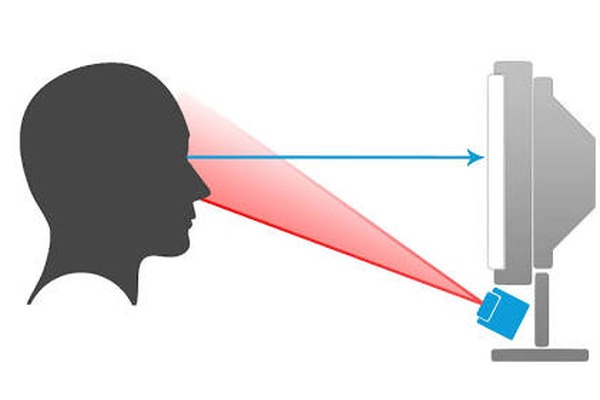
This facility investigates how human minds process language by building sophisticated neural network models. By implementing modern natural language processing pipelines alongside eye-tracking hardware, researchers dissect the precise mechanics of human comprehension. Their ultimate academic mission is using behavioral data to build foundation models that behave less like rigid code and more like biological neural architecture
-
Machine Learning for Language
The Machine Learning for Language (ML²) group is a team of researchers at New York University working on developing and applying state-of-the-art machine learning methods for natural language processing (NLP), with a special focus on artificial neural network models. ML² is affiliated with the larger CILVR lab.
-
TAUR Lab
The TAUR Lab (Text Analysis, Understanding, and Reasoning) is a research group at New York University, led by Greg Durrett. Our research is primarily in the field of Natural Language Processing (NLP) and machine learning. LLMs still fall short in challenging real-world applications such as medical information processing, scientific discovery, and legal reasoning. We develop methods for training these models to have new capabilities, augmenting them to be more reliable, and assessing their outputs to identify strengths and weaknesses of the state of the art. Check out our publications page for more detail.